What Are Backlinks and Why Do They Still Matter for SEO?

Last updated November 2026
Backlinks are links from another website to yours. Search engines treat them as votes of trust that help decide which pages rank. They still matter. According to the Ahrefs search traffic study, 90.63% of pages get no organic traffic from Google, and one of the main reasons is that those pages have no backlinks at all.
The links that count are earned from relevant, trusted sites and placed inside the body of real content. A few high quality backlinks from sites in your niche will help your rankings, and your chances to get cited in AI answers, more than hundreds of cheap directory links.
What Are Backlinks and Do They Still Matter?
Every few months someone declares that link building is dead. Then you look at the pages ranking for any competitive keyword, and they almost always have more backlinks than the pages below them. Links have not stopped mattering. They have simply become harder to fake.
According to a Backlinko analysis of 11.8 million Google search results, the number one result has an average of 3.8x more backlinks than results in positions 2 to 10. That does not prove links alone push a page to the top. It does show that top pages tend to earn far more links than their neighbors.
Google has said publicly that links matter less than they once did, because it now reads content and user signals much better. But "less" is not "zero." For a new site or a competitive topic, backlinks in SEO are still one of the clearest signals you can influence.
There is also a newer reason to care. AI answer engines such as ChatGPT, Google AI Overviews and Gemini pull from sources the web already trusts. Pages that other sites link to are more likely to be crawled, indexed and treated as credible. That makes links part of how you get cited, not only how you rank.
What Is a Backlink?
In simple terms, a backlink is a clickable link on someone else's website that points to a page on your website. If a food blog links to your recipe, that blog has given you a backlink. People also call them inbound links or incoming links.
From your side, it is a backlink. From the other site's side, it is an external link. Same link, two names, depending on which end you stand on. Search engines care about it because a link is a public choice. Someone decided your page was worth sending readers to.
The Parts of a Backlink: Source Page, Target Page and Anchor Text
Every backlink has three parts that affect how much it is worth. Understanding them makes the rest of link building much easier to reason about.
- Source page: the page that contains the link. Its topic, quality and own links shape the value it passes.
- Target page: the page on your site the link points to. A link to a deep guide is often more useful than one to your homepage.
- Anchor text: the visible, clickable words. Anchor text tells Google what the target page is about.
Natural anchor text varies. Some links use your brand name, some use a phrase like "this guide," and some use a descriptive keyword. If every link pointing at you uses the same exact-match keyword, it looks engineered, and that pattern can attract a closer look from Google's link spam systems.
Referring Domains vs Total Backlinks
Referring domains are the number of unique websites linking to you. Total backlinks count every individual link. One site that links to you from 500 footer pages gives you 500 backlinks but only one referring domain.
Referring domains are usually the better number to watch. Ten different trusted sites vouching for you says more than one site repeating itself. When you compare yourself to competitors, compare referring domains first, then look at the quality of those domains.
Why Backlinks Are Important for SEO and AI Answers
So why are backlinks important? They do four jobs at once. They help pages rank, help Google find pages, send real visitors and shape which sources AI tools lean on. Each job works a little differently.
Rankings: Links as Votes of Trust
Google's original breakthrough was PageRank, an idea its founders described in early academic work on information retrieval systems. The core insight was simple: a page linked to by many important pages is probably important too. Google has added hundreds of signals since, but the idea of links as votes still sits underneath.
Not every vote counts the same. A link from Mayo Clinic to a health article carries far more weight than a link from a brand-new blog with no readers. Google looks at who is voting, what they usually write about and whether the vote looks freely given.
Discoverability: Helping Google Find New Pages
Google finds most new pages by following links. Its crawler, Googlebot, moves from page to page through those links, much like a reader clicking around the web. According to Google Search Central, links help it discover pages and understand their relevance.
A page with no links pointing to it is an orphan. Google may still find it through a sitemap, but it has fewer reasons to crawl it often. Backlinks from active sites get your new pages discovered and indexed faster.
Referral Traffic From Real Readers
Backlinks are not only for robots. A link in a popular newsletter, a Wikipedia citation or a busy industry forum can send steady visitors who already care about your topic. Those readers often convert better than cold search traffic, because someone they trust sent them.
Links from social media posts work similarly. Most are nofollow, so they pass little ranking credit, but they can still bring readers. Some of those readers go on to link to you from their own sites.
Get Cited: How Links Shape Which Sources AI Answers Trust
AI answer engines need sources they can trust. Many of them retrieve pages from a search index, then summarize the best matches. If your page ranks well and is widely referenced, it is more likely to be retrieved, and more likely to be cited.
Links also build what you might call brand authority. When many respected sites mention and link to your company, AI models see your brand connected to a topic across many sources. That repeated citation pattern makes it easier for ChatGPT or Google AI Mode to name you in an answer.
How Backlinks Work: Crawling, Link Equity and Trust
Before you chase any tactic, it helps to know what happens after another site links to you. Here is how search engines interpret backlinks in plain language.
How Google Follows and Evaluates Links
First, Googlebot crawls the source page and sees your link. It records the URL, the anchor text and the words around it. Then it adds your page to its queue if it has not seen it before.
Next, Google evaluates the link. It asks questions like these:
- Is the source site trusted and relevant to this topic?
- Is the link inside real content, or buried in a footer or sidebar?
- Does the anchor text and surrounding context match the target page?
- Does the link look editorial, or does it look paid or swapped?
Context matters a lot here. Google reads the paragraph around a link, not just the anchor. A link inside a sentence that explains why your guide is useful sends a clearer signal than a bare URL in a list of fifty others.
Link Equity and Why Relevance Beats Volume
Link equity, sometimes called link juice, is the ranking value a link passes from one page to another. Pages with strong backlink profiles have more equity to share. Each link on that page passes along a portion of it.
Topical relevance decides how useful that equity is. A link from a respected gardening site to your gardening guide makes sense. The same link to a crypto exchange makes no sense, and Google largely ignores it. This is why a handful of relevant links often beats a pile of random ones.
Volume without relevance can even hurt. Large batches of low quality links from unrelated sites look like manipulation. Google's systems are built to discount them, and some patterns can trigger manual review.
Dofollow, Nofollow, Sponsored and UGC Attributes
Site owners can add a rel attribute to a link to tell Google how to treat it. The dofollow vs nofollow question comes up constantly, but there are actually four common cases. Google documents them in its guide to qualifying outbound links.
| Attribute | What it means | Typical use |
|---|---|---|
| Dofollow (no attribute) | A normal link that can pass ranking credit | Editorial links inside articles |
| rel="nofollow" | A hint not to pass credit or associate the sites | Links you do not want to vouch for |
| rel="sponsored" | The link is paid, sponsored or an ad | Affiliate links, paid placements |
| rel="ugc" | User-generated content | Comments, forum posts |
Google treats these attributes as hints rather than strict rules. Nofollow links still have value, though. Wikipedia marks its outbound links nofollow, yet a Wikipedia citation can bring traffic and lead journalists to find and link to you with dofollow links later.
What Makes a High Quality Backlink
A high quality backlink usually checks most of these boxes:
- Relevant: the linking site covers your topic or a close one.
- Trusted: the site has its own strong backlinks and real readers.
- Editorial: a person chose to link because your page helped their content.
- Contextual: the link sits inside body text, not a footer or blogroll.
- Natural anchor text: descriptive, varied and not stuffed with keywords.
- Dofollow: it can pass link equity, though nofollow links still help in other ways.
This is the real split between natural and artificial backlinks. Natural links come from people who found your work useful. Artificial ones come from link farms, private blog networks or paid swaps. The first kind compounds over time. The second kind can vanish overnight, or get your site penalized.
Examples of Backlinks You Can Actually Earn
There are many types of backlinks, but only a few are worth your time. These are the ones small teams can realistically earn. For step-by-step instructions, see a dedicated link building guide. This section focuses on what each type is and why it works.
Editorial Backlinks From Original Data
Editorial backlinks are links a writer adds because your content supports their point. They are the gold standard. You do not ask for them directly; you publish something worth citing.
Original data is the most reliable way to earn them. A survey of your customers, a pricing benchmark or an analysis of public data gives writers a fact they cannot get elsewhere. The Ahrefs and Backlinko studies cited in this article are examples. People link to them because they need the number.
Guest Post and Digital PR Links
A guest post is an article you write for another site, usually with a link back to your own. It works best when the host site is relevant and the article is genuinely useful. Guest posting purely for links, at scale, is something Google warns against.
Digital PR means pitching stories, data or expert comments to journalists. Journalist outreach services connect reporters who need sources with experts who can answer. A single quote in a trade publication can earn a link from a site you could never reach through cold email.
Broken Link Building
Broken link building starts with finding dead links on relevant sites. You then offer your own page as a working replacement. The site owner fixes a problem, and you get a link.
It works because it is helpful, not because it is clever. Your replacement page must truly cover what the dead link used to cover. Otherwise the editor has no reason to swap it in.
Directory, Profile and Partner Links
Industry directories, business listings and partner pages are easy wins. A software integration partner might list you on its marketplace. A local chamber of commerce might link to member businesses.
These links rarely move rankings on their own. They do help Google confirm who you are, and they round out a natural backlink profile. Stick to directories real people use. Skip the thousands of spammy directories that exist only to sell links.
Tool and Resource Page Links
Free tools attract links for years. A calculator, template or checker solves a small problem, and bloggers link to it whenever they mention that problem.
Resource pages work the same way. Many sites keep curated lists of useful tools and guides for their readers. If your tool or guide fits, a short, polite note to the page owner is often all it takes.
Backlinks vs Internal Links, External Links and Brand Mentions
People often mix up different kinds of links. This quick comparison clears up the terms before we look at each one.
| Type | Where it points | Who controls it | Main SEO role |
|---|---|---|---|
| Backlink | From another site to yours | The other site | Authority and trust |
| Internal link | From your page to your page | You | Structure and crawl paths |
| External link | From your site to another | You | Context and reader value |
| Brand mention | No link, just your name | The other site | Brand signals, AI citation |
Backlinks vs Internal Links
Internal links connect pages on your own site. You control them completely. They help Google crawl your site, understand which pages matter most and spread link equity from strong pages to newer ones.
The two work together. When a guide earns many backlinks, internal links from that guide pass some of its strength to related pages. A smart internal linking plan makes every backlink you earn go further.
Backlinks vs External (Outbound) Links
External links point from your site to someone else's. They are another site's backlinks. Linking out to good sources does not hurt you. It helps readers and shows Google the context of your page.
Just be careful what you vouch for. If a link is paid, mark it rel="sponsored". If you do not trust a source, use nofollow or skip the link entirely.
Backlinks vs Unlinked Brand Mentions
An unlinked mention is when a site names your company without linking. It passes no link equity. Even so, mentions still matter for brand authority and AI visibility, because AI models learn from text, not just links.
Unlinked mentions are also an easy source of new links. Find articles that already mention you, then ask the writer to add a link. They already like you enough to name you, so the request is small.
Domain Authority vs Google's Own Signals
Domain Authority is a score created by Moz that estimates how likely a site is to rank. Other tools have similar metrics. These scores are useful for comparing sites quickly, but Google does not use them.
Google has its own signals, and it does not publish a single authority score. Treat domain authority as a rough guide when you prospect for links, not as a goal. A relevant site with a modest score often beats an unrelated site with a high one.
What to Do Next: Check and Build Your Backlinks
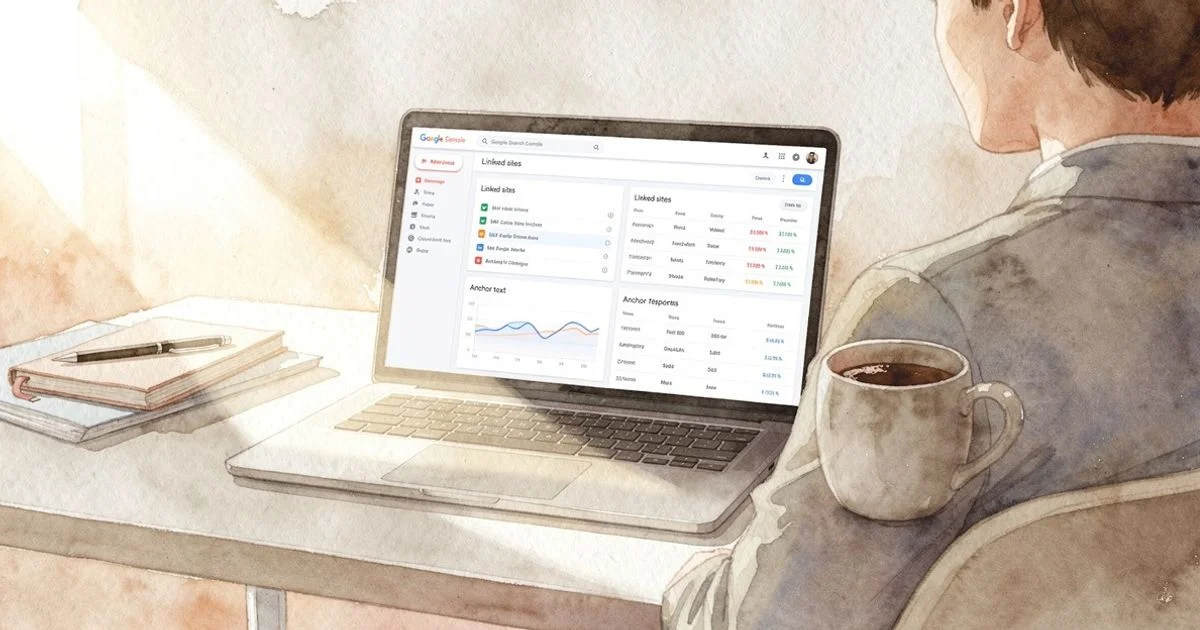
You now know what backlinks are and how they work. Here is how to turn that into action without overthinking it.
Check Backlinks in Google Search Console
The simplest way to check backlinks is Google Search Console. It is free and the data comes straight from Google. Open the Links report to see your top linking sites, your most linked pages and the anchor text people use.
Search Console shows a sample, not every link. Third-party tools from Ahrefs, Moz and others add more detail and competitor data. For a full walkthrough, follow a dedicated backlink checking guide. Start with Search Console, though, because it shows what Google actually sees.
While you check, look for toxic backlinks: links from obvious spam, hacked sites or link farms. Google says it ignores most of these on its own. You only need its disavow tool if you have a manual action or a history of bought links.
Publish Link-Worthy Content on a Schedule
The best way to get backlinks is to publish things people want to reference, and to keep doing it. One great study helps. A steady stream of useful pages helps much more.
- Publish one piece of original data or a free tool each quarter.
- Write clear guides on questions your audience actually asks.
- Pitch each new asset to the writers who cover your topic.
- Repurpose findings for social media and newsletters to reach more readers.
Consistency beats bursts. A weekly publishing and outreach rhythm builds referring domains steadily, and that steady growth looks natural to Google.
Avoid Link Schemes and Paid Links
Google is direct about this. According to Google Search Central's spam policies, buying or selling links that pass ranking credit violates its rules. So do large-scale link exchanges, private blog networks and automated link programs.
The risks are real. Google can ignore those links, so you waste the money. In worse cases it issues a manual action that drops your rankings. Paid placements are fine for traffic and awareness, as long as the links carry rel="sponsored".
FAQs
Does Google still use backlinks as a ranking factor?
Yes. Google's own documentation says it uses links to find new pages and to judge how relevant and trusted a page is. Google has said links matter less than they used to, because it now understands content better. Still, pages with no backlinks rarely rank for competitive terms, so links remain worth earning.
Is buying backlinks illegal or against Google's rules?
Buying backlinks is not illegal, but it breaks Google's spam policies when the link passes ranking credit. If Google catches it, the links can be ignored, or your site can receive a manual action. Paid links should always carry a rel="sponsored" attribute so they stay within the rules.
How do I get backlinks for my website?
Publish things people want to reference, like original data, free tools or clear guides. Then tell the people who write about your topic. Guest posts, digital PR and broken link building are the most reliable ways to get backlinks without paying for them. Start small and keep a steady pace.
How many backlinks do I need to rank?
There is no fixed number of backlinks you need to rank. Check how many referring domains the pages ranking for your keyword have, then aim to match them with links from relevant sites. Quality and relevance count more than total volume, so ten strong links can beat a hundred weak ones.
Can I do link building and SEO myself?
Yes. Most small sites can handle keyword research, content and basic outreach on their own with the right tools. The hard part is doing it consistently. Pick a weekly cadence for publishing and outreach that you can actually keep, and review your results in Search Console every month.
How do I check my backlinks?
Open Google Search Console and go to the Links report. It lists your top linking sites, linked pages and anchor text for free. For deeper data and competitor comparisons, add a third-party backlink tool, and use it to spot new links, lost links and low quality patterns.
Conclusion: Earn Links Worth Citing
Backlinks are still one of the clearest signals that a page deserves to rank. They help Google find your pages, tell it which ones to trust and send real readers your way. They also shape which sources AI answers lean on when they decide what to cite.
The playbook is not complicated. Publish original, useful content. Tell the right people about it. Earn links from relevant sites, skip link schemes and check your progress in Search Console. Do that every week, and your referring domains will grow along with your rankings.
If you want a steady system for publishing link-worthy content and tracking whether it ranks and gets cited, Zivooo gives you keyword and AI prompt research, a competitor-based content plan, an article writer, scheduled publishing to WordPress and Ghost, daily rank tracking and AI visibility tracking. It is a practical option for marketers and founders who want to earn links and show up in Google and AI answers.
WRITTEN BY

Muntasir Rashid
Hello 👋 I’m Muntasir, founder of Zivooo and a content marketer with 20+ years of hands-on experience in marketing, growth, and building businesses.
I’ve spent the last two decades marketing my own ventures and helping clients grow through content, SEO, and digital marketing. Along the way, I’ve learned that the best strategies rarely come from theory, they come from testing, experimenting, failing, and figuring out what actually works.
Content marketing and growth are my forte. Here, I share practical insights, experiments, and lessons from the trenches covering SEO, GEO, AEO, AI search, and growth strategies for modern tech companies.
Keep learning, keep growing
We have more articles on similar topics to help grow your business.
Backlink Building Packages: What They Include and Cost
Backlink building packages bundle outreach, content, and link placements at a fixed price. Learn what each tier includes and what you should expect to pay.

8 Organic Traffic Software Tools to Grow Search and AI Visibility
Organic traffic software helps you find keywords, optimize content, audit your site, and track rankings. Compare 8 tools to grow search and AI visibility.