Content Strategy for the Web: What It Is and How It Works
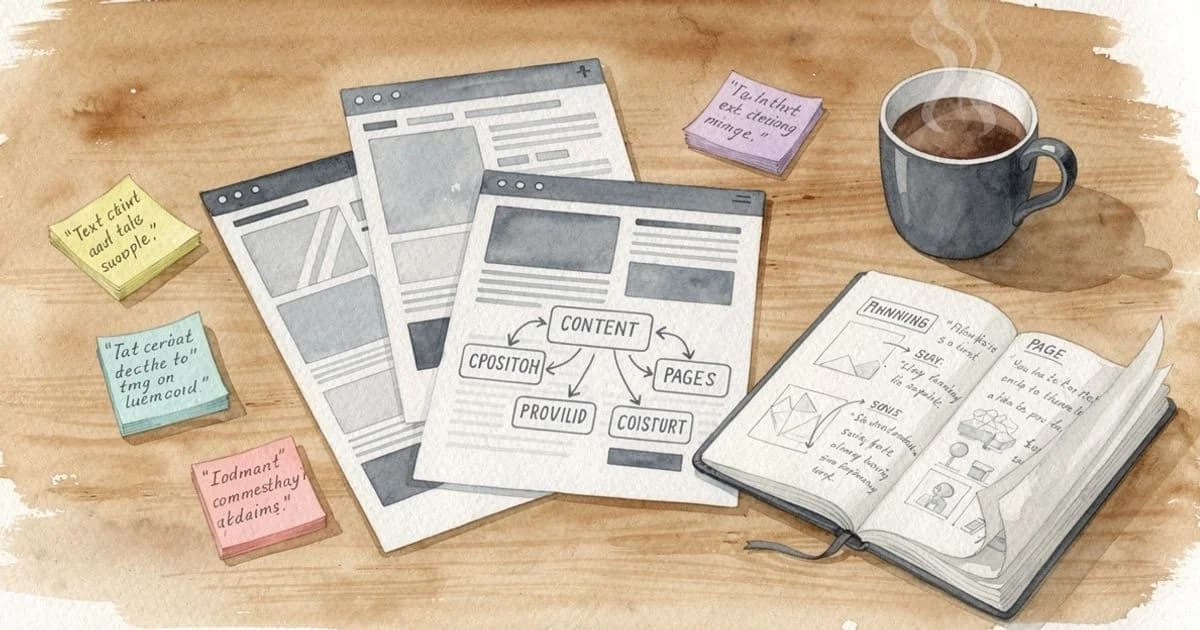
Content strategy for the web is the ongoing practice of planning, creating, delivering, and governing content that is useful, usable, and tied to real business goals. It covers what you publish, why, for whom, and how you keep it accurate over time, not just the writing itself.
The term was popularized by Kristina Halvorson in her 2009 book Content Strategy for the Web, and the discipline now connects your business objectives directly to what your users actually need. According to the Nielsen Norman Group, content strategy is about content that is purposeful rather than published for its own sake.
This guide explains the concept first, in plain language a founder or growth marketer can act on. Then it covers how the work runs, real examples, and how content strategy differs from content marketing and content design.
What content strategy for the web actually means
Most teams treat content as a publishing task. You write a post, hit publish, and move on. A real content strategy is the system behind that act. It decides which pages should exist, who they serve, and how you keep them accurate.
Think of the difference between cooking one meal and running a kitchen. Content strategy is the kitchen. It sets the menu, the standards, the supply chain, and the cleanup. Any single article is just one plate that leaves the pass.
The web makes this harder than print. Pages linger for years. Search engines and AI answer engines read them constantly. Without a plan, content piles up, contradicts itself, and slowly stops earning its place. Strategy is what keeps the whole library pulling in one direction.
What is content strategy for the web?
Content strategy for the web is a discipline, not a document. It connects your business goals to real user needs, then uses that connection to guide every content decision you make across the web.
The core strategy statement
According to the Nielsen Norman Group, content strategy is the practice of planning, creating, delivering, and governing useful, usable, and purposeful content. That definition does a lot of work. Each verb points at a different part of the job.
- Planning: deciding what content should exist and why.
- Creating: producing it to a consistent standard.
- Delivering: publishing it where users and search engines find it.
- Governing: keeping it accurate, owned, and up to date.
Kristina Halvorson popularized this framing in Content Strategy for the Web. Her core idea still holds: content strategy is the discipline that links business objectives to what your audience needs. Practitioners from UX design to SEO still cite that book as the reference point.
Substance, structure, workflow, and governance
Halvorson and Rach's model splits the field into four parts. It is the clearest way to see the full scope of the work, so it is worth walking through.
- Substance: the topics, messaging, and brand voice that make your content yours.
- Structure: how content is organized, tagged, and connected so people can find it.
- Workflow: the process and tools that get content from idea to publish.
- Governance: the rules, roles, and ownership that keep it healthy over time.
Substance and structure describe the content itself. Workflow and governance describe the people and process behind it. Skip either side and the strategy breaks. Great topics with no governance decay. Tight governance with weak substance bores everyone.
Why web content strategy matters
Content is cheap to produce and expensive to maintain. A content strategy for the web is how you stop spending on pages that no longer earn attention, rankings, or citations. Here is why that matters.
It ties content to business goals
Without strategy, teams publish because publishing feels productive. Each post serves a vague sense of activity. With strategy, every page maps to a goal: a signup, a sale, a support deflection, or a specific search intent you want to own.
This alignment also sharpens your brand identity, voice, and messaging. When you know the organizational objective behind each topic, you stop producing generic filler. You produce content a defined audience actually requested through their behavior and searches.
It fixes content decay and sprawl
Old pages rot. Products change, prices move, and advice goes stale. A corporate blog with hundreds of untended posts quietly loses trust and traffic. Governance is the fix. It assigns owners and review dates so content stays current.
Sprawl is the other half of the problem. Teams create overlapping pages that compete with each other in search. A content audit and a clear content inventory show you what to merge, update, or retire. Less content, better maintained, usually wins.
It decides whether AI answers cite you
In 2026, people get answers from Google AI Overviews, ChatGPT, and Gemini as often as from blue links. These systems pull from content that is clear, structured, and trustworthy. Messy content rarely gets cited.
Strategy is what makes your content quotable. Clean structure, direct answers, and accurate facts help AI engines lift your pages into their responses. That is the practical payoff of treating content as a system rather than a pile of posts.
How content strategy for the web works
The work runs in a loop, not a straight line. You research, audit, plan, publish, then measure and start again. Below is how each stage plays out in practice.
Research and alignment
Everything starts with two questions: what does the business need, and what do users need? You answer the first with stakeholder interviews. You answer the second with user research.
User research methods include interviews, surveys, and analytics. Interviews reveal motivations. Surveys scale those findings. Analytics show real behavior, like which pages people exit from. Together they tell you what to create and what to cut.
This is also where you build audience segmentation and user personas. A persona is a shorthand for a real segment: their goals, their questions, their lifecycle stage. It keeps the team writing for people, not for an abstract "visitor."
Map those personas onto user journeys. Someone early in the journey wants to understand a problem. Someone late in it wants to compare options and buy. Your content should meet each stage, matching the search intent behind the queries people actually type.
Alignment closes this stage. You translate business goals and user needs into a shared set of priorities. Everyone, from the SEO lead to the content designer, works from the same brief. Cross-functional education here saves months of rework later.
Content audit and gap analysis
You cannot plan the future without seeing the present. A content audit catalogs what you already have and judges how well it performs. Start with a content inventory: a full list of your pages, their URLs, owners, and topics.
Then analyze each item. Is it accurate? Does it match a real search intent? Does it support a goal? Pull in Analytics and Search Console data so judgment rests on numbers, not opinion. Content analysis like this exposes duplication and decay fast.
Classification matters here. Group content by topic, funnel stage, and format so patterns emerge. You will often find three thin posts that should become one strong guide, or a key topic with no page at all.
Gap analysis follows. Compare what you have against what your personas need and what competitors rank for. The gaps become your roadmap. This step turns a vague "we should blog more" into a specific, prioritized list of pages to create.
Do not skip accessibility. Diverse audiences include people using screen readers, slow connections, or non-native languages. Clear headings, alt text, and plain writing serve them and improve how machines read your content too.
Planning and governance
Now you turn the roadmap into a schedule. An editorial calendar assigns topics, owners, formats, and publish dates. It balances new content against updates to existing pages, so maintenance never falls off the list.
Pick formats deliberately. Blog posts, landing pages, guides, documentation, video, email, and social posts each serve different jobs. A good plan chooses the formats that fit your audience, rather than chasing every channel at once.
Content governance is what keeps the system alive after launch. It answers the boring but vital questions. Who owns this page? When is it reviewed? What is the style and brand voice standard? Who approves changes?
Governance also covers change management. As products, teams, and strategy shift, your content rules shift with them. Write the rules down. A short governance doc beats tribal knowledge that leaves when a key person does.
Examples of content strategy for the web
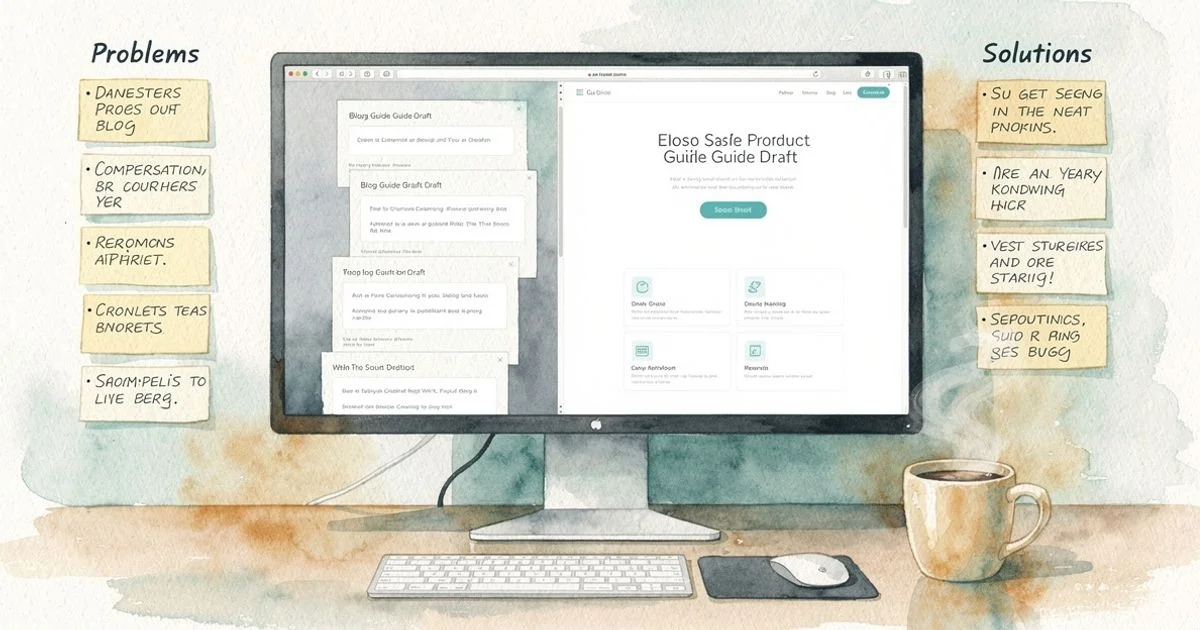
Abstract definitions only go so far. Here are three concrete cases that show how the same discipline adapts to different businesses.
A SaaS product site
A SaaS company sells a project tool. Research shows buyers search for both problems ("how to track team tasks") and solutions ("task tracking software"). The strategy builds two content layers to match that search intent.
The top layer is a guide hub that answers problem questions and builds trust early in the journey. The bottom layer is a set of product and comparison pages for buyers ready to decide. Documentation keeps existing users successful, which cuts churn.
Governance ties it together. Each feature release triggers a doc update and a check on related posts. The editorial calendar schedules quarterly refreshes so nothing drifts out of date. The result is a site where every page has a job.
A corporate blog refresh
A mature company has eight years of blog posts and falling traffic. The audit finds hundreds of pages, many thin, stale, or overlapping. This is classic content sprawl. The fix is pruning, not more publishing.
Using the content inventory and Analytics, the team merges weak posts into stronger pillar pages, updates the high-value ones, and retires the dead weight. Internal links get rebuilt around the survivors. The library shrinks but performs better.
Then governance stops the rot from returning. Every post gets an owner and a review date. A simple style guide locks in brand voice. The blog goes from a liability to an asset that search engines and AI answers trust again.
An e-commerce category strategy
An online retailer sells outdoor gear. Product pages alone do not capture shoppers who are still researching. The strategy adds category-level content: buying guides, comparison tables, and seasonal advice tied to real queries.
Each category page answers the questions a buyer asks before purchase. Structure matters here, so products, guides, and reviews link cleanly together. Shoppers move from "which tent for cold weather" to a specific product without friction.
Data drives the roadmap. Search demand and conversion rates decide which categories get content first. Governance keeps prices, stock status, and seasonal advice accurate, because a wrong detail on an e-commerce page costs real sales.
Content strategy vs content marketing vs content design
These three terms get mixed up constantly. They overlap, but each answers a different question. Getting the distinction right helps you staff and scope the work correctly.
| Discipline | Core question | Main focus |
|---|---|---|
| Content strategy | What content should exist, and how is it governed? | Planning, structure, governance |
| Content marketing | How do we use content to attract and convert? | Promotion, distribution, growth |
| Content design | How do we shape content to meet user needs? | Words, flow, usability on the page |
Content strategy vs content marketing
Content strategy decides what content should exist, who owns it, and how it is maintained. Content marketing is the use of that content to attract and convert an audience. You need the strategy first, so the marketing has something sound to promote.
A content marketing strategy without underlying content strategy is a megaphone with nothing solid to say. You can drive traffic to pages that confuse or contradict, and the numbers look busy while trust leaks away. Strategy supplies the substance marketing amplifies.
Content strategy vs content design
Content design is about shaping individual content to serve a user in the moment: the right words, the right order, the clearest path through a task. It sits closer to UX design and UI design than to promotion.
Content strategy zooms out. It decides the page should exist and sets the standards; content design perfects the page itself. On a strong team the two work hand in hand, one setting direction and the other executing on usability.
Where SEO, GEO, and AEO fit
SEO, GEO, and AEO are how your strategy earns visibility. An SEO content strategy aligns pages to search intent so Google ranks them. GEO (generative engine optimization) and AEO (answer engine optimization) aim at AI answers instead of blue links.
None of these replace content strategy. They sit on top of it. Clean substance and structure are what let SEO rank you and let AI engines cite you. Weak content cannot be optimized into trust; it has to be built that way.
What to do next
You do not need a huge team to start. You need a clear sequence. Run these steps in order and you will have a working content strategy for the web in a few focused weeks.
- Write your core strategy statement: the business goal plus the user need.
- Interview a few stakeholders and a few real users.
- Build a content inventory of every page you already have.
- Run a content audit against performance data and search intent.
- Do a gap analysis to find missing and overlapping topics.
- Build an editorial calendar that balances new pages and updates.
- Write down your governance rules: owners, review dates, brand voice.
Then measure and loop. Check which pages rank, convert, and get cited by AI answers. Feed what you learn back into the next audit. The strategy improves every cycle, and your content library gets leaner and stronger as it goes.
FAQs
What does content strategy mean?
It means planning, creating, delivering, and governing content so every page serves a clear user need and a business goal. It is the system behind your content, not a single blog post or campaign. That system covers topics, structure, workflow, and ownership together.
What are the main types of content?
Common types include blog posts and articles, landing and product pages, guides and documentation, video, email, and social posts. A good strategy picks the formats that match your audience and your goals, rather than chasing every channel. Fewer formats done well usually beat many done thinly.
What are the 5 C's of content marketing?
They are usually listed as clarity, conciseness, compelling, credible, and consistent. They describe quality traits for individual content, while content strategy is the broader plan that governs why and when you create it. Use the 5 C's to judge a page; use strategy to decide if the page should exist.
How is content strategy different from content marketing?
Content strategy decides what content should exist, who owns it, and how it is maintained. Content marketing is the use of that content to attract and convert an audience. You need the strategy first, so the marketing has something sound to promote and distribute.
Who coined content strategy for the web?
Kristina Halvorson popularized the term with her 2009 book Content Strategy for the Web, which framed it as a discipline connecting business goals to user needs. It remains the reference point most practitioners cite when they define the field today.
Conclusion
Content strategy for the web is the difference between publishing and building. It links your business goals to real user needs, keeps your library accurate through governance, and decides whether search engines and AI engines trust and cite you.
Start small. A clear strategy statement, an honest content audit, and a written governance rule set will put you ahead of most teams still publishing on instinct. Then run the loop, measure, and refine as you go.
If you want to turn that content strategy into pages that rank on Google and get cited by AI answers, Zivooo gives you keyword and AI prompt research, a content plan built from competitors and search data, an article writer with six formats, a live editor scoring 40+ SEO, GEO and AEO factors, publishing to WordPress and Ghost, plus AI visibility and daily rank tracking. It is a practical setup for founders and marketers who want content that stays accurate and gets found, with no subscription.
Author Details

Muntasir Rashid
Hello 👋 I’m Muntasir, founder of Zivooo and a content marketer with 20+ years of hands-on experience in marketing, growth, and building businesses.
I’ve spent the last two decades marketing my own ventures and helping clients grow through content, SEO, and digital marketing. Along the way, I’ve learned that the best strategies rarely come from theory, they come from testing, experimenting, failing, and figuring out what actually works.
Content marketing and growth are my forte. Here, I share practical insights, experiments, and lessons from the trenches covering SEO, GEO, AEO, AI search, and growth strategies for modern tech companies.
Keep learning, keep growing
We have more articles on similar topics to help grow your business.

Headline SEO: How to Write Titles That Rank and Get Clicked
Headline SEO means writing titles that rank and earn clicks.


SEO vs SEM: What Is the Real Difference?
SEO and SEM both drive search visibility, but through opposite methods.